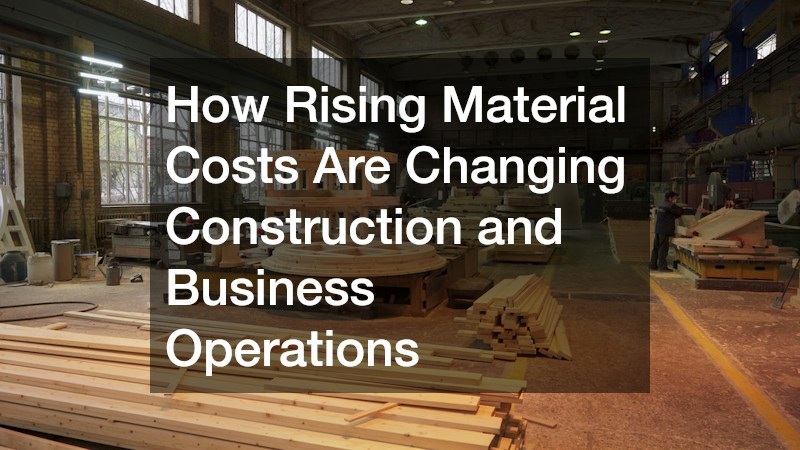
Rising material and operating costs are changing the way businesses approach construction, expansion, renovations, relocations, and property improvements. What may once have been a straightforward commercial project can now require more detailed budgeting, longer planning periods, and closer coordination between owners, contractors, suppliers, and specialized service providers.
Concrete, lumber, steel, electrical components, equipment, fuel, and construction-related services can all influence the final cost of a commercial project. At the same time, businesses must account for labor shortages, disposal fees, equipment rentals, transportation expenses, permitting requirements, and other costs that can quickly push a project beyond its original estimate.
For business owners, the challenge is not simply dealing with higher prices. It is understanding how those increases affect the entire project lifecycle. A storefront renovation, factory expansion, office build-out, equipment relocation, or facility upgrade may involve dozens of interconnected expenses. A change in one area can create additional costs somewhere else.
This makes early planning particularly important. Businesses that understand their likely expenses, request detailed estimates, evaluate alternatives, and build reasonable contingencies into their budgets are better positioned to keep projects moving without unnecessary financial surprises.
Why Are Commercial Construction Costs Increasing?
Commercial construction costs can rise for several reasons, and material prices are only one part of the equation. Supply chain disruptions, higher manufacturing expenses, transportation costs, labor shortages, fuel prices, and disposal fees can all contribute to the final price of a project.
For businesses, these increases can affect both new construction and improvements to existing facilities. A company may have planned a renovation based on an estimate prepared months earlier, only to discover that materials or subcontractor services cost substantially more when the project is ready to begin.
The effect can be particularly significant for projects involving large quantities of concrete, steel, electrical equipment, mechanical systems, or specialized components. Even relatively small increases per unit can become substantial when multiplied across a large commercial facility.
Businesses may also face indirect costs. Delayed materials can extend construction schedules, while longer schedules can increase equipment rental, temporary facility, labor, and financing expenses. In some cases, postponing a project may also mean delaying the business expansion or operational improvements that prompted the construction in the first place.
Commercial Renovation Budgets Need More Flexibility
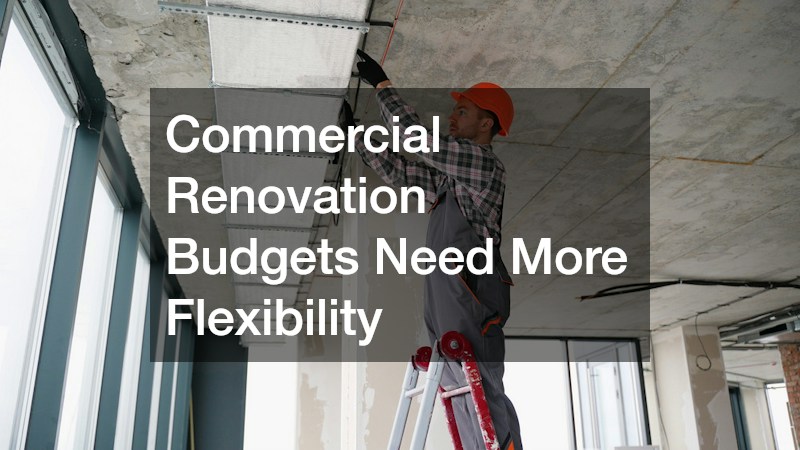
Commercial renovations often require a more detailed approach to budgeting than routine property maintenance. An office renovation, retail improvement, warehouse upgrade, or industrial facility modification can involve multiple trades working simultaneously.
Electrical, plumbing, structural, mechanical, flooring, lighting, signage, and interior work may all need to be coordinated. If one portion of the project changes because of material availability or unexpected site conditions, other parts of the schedule can be affected as well.
Businesses should therefore avoid treating the initial estimate as a guaranteed final cost. Instead, project budgets should account for potential price changes, unforeseen conditions, and additional work that may become necessary once construction begins.
Several strategies can help businesses maintain better control over commercial renovation expenses:
- Request itemized estimates. Separating labor, materials, equipment, permits, disposal, and other expenses makes it easier to identify where costs are increasing.
- Establish a contingency budget. Unexpected structural, electrical, or site conditions can add significant expenses.
- Compare material alternatives. Contractors may be able to recommend products that meet performance requirements without exceeding the project’s budget.
- Confirm lead times. A cheaper material may not be the most economical choice if it creates a lengthy delay.
- Review the project schedule carefully. Delays can create additional rental, labor, and operational expenses.
The goal is not necessarily to select the cheapest option at every stage. Businesses need to consider total project cost, durability, maintenance requirements, availability, and the potential effect of delays.
How Do Older Commercial Buildings Affect Project Costs?
Older commercial buildings can create another layer of financial uncertainty. Many offices, retail properties, warehouses, manufacturing facilities, and other commercial structures were designed around standards, equipment, and operational requirements that differ significantly from those of today’s businesses.
A building constructed decades ago may have aging framing, outdated foundations, limited electrical capacity, deteriorated masonry, or mechanical systems that cannot easily support modern equipment.
A business may want to install heavier rooftop HVAC equipment, expand an interior space, add new production machinery, or modify load-bearing areas. Before making these changes, it is important to determine whether the existing structure can safely accommodate them.
This is where structural engineering becomes particularly relevant to commercial projects.
A professional structural assessment can help determine whether foundations, framing systems, load-bearing walls, floors, roofs, and other components are capable of supporting proposed changes. It can also identify deficiencies that may not be obvious during a basic visual inspection.
Why Structural Assessments Can Protect a Business Budget
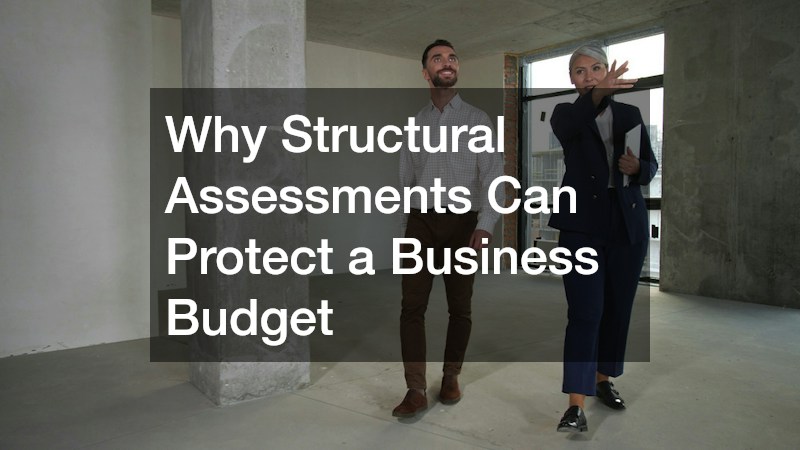
Skipping structural evaluation may appear to save money during the early stages of a project. However, discovering a major problem after demolition or construction has already started can be considerably more expensive.
A contractor might uncover deteriorated structural members, insufficient footings, outdated reinforcement, or other conditions that require immediate attention. The business could then face redesign costs, additional engineering work, construction delays, and potentially significant reinforcement expenses.
A structural assessment provides an opportunity to identify these issues before they disrupt the construction schedule.
For businesses, this is particularly important because construction delays can affect more than the project budget. A delayed renovation may prevent a retail location from reopening, postpone a production expansion, disrupt employee operations, or delay a company’s ability to occupy a new facility.
In other words, structural planning can protect both construction spending and business continuity.
Why Is Commercial Electrical Work Becoming More Important?
Modern businesses rely on increasingly sophisticated electrical systems. Commercial properties may need to support computers, servers, manufacturing equipment, refrigeration, HVAC systems, security systems, charging stations, lighting, and other high-demand equipment.
Older electrical infrastructure may not have been designed for these requirements.
When businesses renovate or expand their facilities, electrical capacity therefore needs to be considered alongside the rest of the construction plan. Installing new equipment without addressing outdated wiring, panels, or distribution systems can create safety and operational concerns.
Working with a qualified commercial electrical contractor can help businesses evaluate their electrical requirements and plan upgrades that comply with applicable codes.
Before hiring a contractor, businesses should:
- Confirm that the contractor is licensed and insured for commercial work.
- Request a written estimate separating labor and material expenses.
- Discuss energy-efficient lighting and electrical equipment options.
- Confirm which permits are required.
- Ask about expected project timelines and potential disruptions to operations.
- Determine whether the existing electrical system can support planned equipment.
Energy-efficient systems may also help businesses manage operating expenses over time. While an efficient fixture or system may have a higher initial cost, lower electricity consumption and reduced maintenance requirements can affect its long-term value.
How Are Demolition Costs Affecting Commercial Projects?
Demolition is often treated as the beginning of a construction project, but it can represent a substantial expense of its own. Commercial demolition may involve specialized equipment, skilled operators, environmental testing, debris transportation, permits, and disposal.
Fuel and equipment costs can influence demolition pricing, while labor shortages can increase the cost of operating excavators, bulldozers, loaders, and other heavy machinery.
The composition of the building matters as well. A simple structure with limited hazardous materials may be relatively straightforward to remove. An older commercial property may require additional inspection and specialized handling if asbestos, lead-based materials, or other regulated substances are present.
Businesses planning demolition should request detailed estimates that explain what is included.
Questions worth asking include:
- Does the estimate include permits?
- Is hazardous-material testing included?
- Who is responsible for debris hauling?
- Are disposal fees included?
- Is site cleanup included?
- Are recycling credits reflected in the estimate?
- What happens if unexpected materials are discovered?
Understanding these details before demolition begins can help prevent unexpected charges.
Can Commercial Demolition Generate Additional Savings?
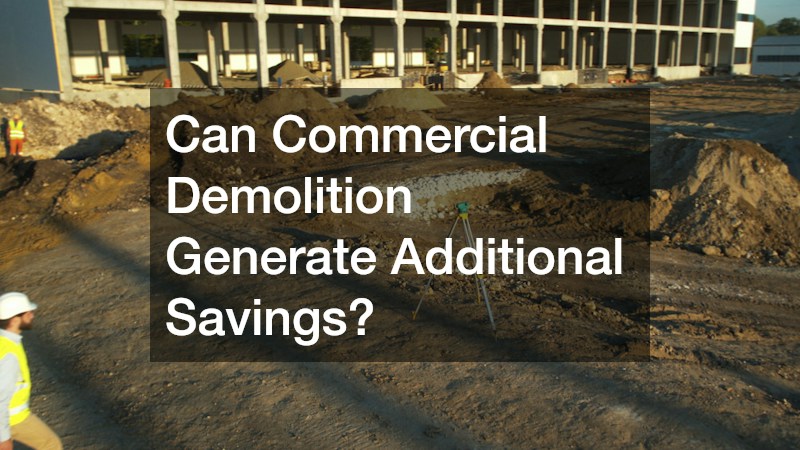
Waste management is another consideration. Concrete, metal, wood, and other materials may sometimes be separated for recycling rather than sent directly to a landfill.
Although sorting materials can require additional labor and equipment, it may reduce disposal expenses in certain circumstances. Some recyclable materials may also have resale or scrap value.
Businesses should evaluate the economics of recycling on a project-by-project basis rather than assuming that landfill disposal is always the least expensive option.
The size and location of the building, local disposal fees, labor requirements, transportation distances, and available recycling facilities can all influence the final decision.
Why Construction Waste Management Needs to Be Part of the Budget
Commercial construction and demolition projects can generate substantial quantities of waste. Drywall, lumber, packaging, stamped concrete, metal, insulation, and other materials can accumulate quickly, especially during large renovations or facility upgrades.
A roll off dumpster service can give businesses and contractors a practical way to manage this waste while keeping construction areas organized.
Waste removal should be considered during project planning rather than added at the last minute. Dumpster pricing can depend on container size, rental duration, weight limits, transportation, and disposal fees.
Businesses should clarify:
- What dumpster sizes are available.
- Which materials can be placed in the container.
- Whether hazardous materials are prohibited.
- How long the container can remain on site.
- Whether delivery and pickup are included.
- What weight restrictions apply.
- How overage charges are calculated.
Choosing a container that is too small can result in additional pickups, while an unnecessarily large container can mean paying for unused capacity.
The right solution depends on the expected volume and type of waste generated by the project.
How Are Material Costs Affecting Manufacturing Businesses?
Manufacturing and industrial businesses can feel the effects of rising costs even when they are not actively renovating their facilities. Production depends on a wide range of materials, utilities, equipment, transportation services, and specialized suppliers.
For example, industrial operations may need to renegotiate purchasing arrangements with an industrial gas supplier when the cost of oxygen, nitrogen, or other production inputs changes.
These increases can affect manufacturing economics in several ways. A business may need to absorb higher costs, adjust its pricing, renegotiate supplier agreements, or look for operational efficiencies.
The impact can extend beyond the manufacturer itself. If production becomes more expensive, companies may eventually adjust the prices of finished goods or services.
For smaller businesses, these pressures can also influence expansion decisions. A company considering a new production line, additional warehouse space, or upgraded equipment may need to reassess the timing and financial structure of that investment.
This is why material-cost management has become part of broader business planning rather than simply a construction concern.
What Should Businesses Consider When Moving Heavy Equipment?
Business expansion and relocation can introduce another major expense: moving machinery.
Factories, warehouses, workshops, construction businesses, and other industrial operations may rely on equipment that cannot simply be loaded onto a standard moving truck. Specialized transportation, rigging, lifting equipment, permits, and experienced crews may all be required.
Machinery moving can involve considerable planning, particularly when equipment is heavy, oversized, fragile, or difficult to access.
The cost of the move should therefore be considered alongside other relocation expenses rather than treated as an incidental service.
Businesses should evaluate:
- Equipment dimensions and weight.
- Access points at the existing and new facilities.
- Required cranes, forklifts, or rigging systems.
- Transportation requirements.
- Insurance coverage.
- Installation and reconnection requirements.
- Expected downtime.
Planning the move carefully can reduce the risk of equipment damage and unnecessary interruptions.
For a manufacturing business, downtime can be particularly costly because moving a machine may temporarily stop production. The actual relocation cost is therefore only one part of the financial equation. Businesses also need to consider the revenue and productivity that could be affected while equipment is unavailable.
Can Temporary Heating Help Commercial Construction Stay on Schedule?
Weather-related delays can create significant problems for construction projects. Cold temperatures can affect concrete curing, pipes, equipment, worker productivity, and other aspects of a commercial construction site.
Temporary heating can provide a way to maintain workable conditions during certain winter projects. Contractors may use boiler rental services when temporary heating capacity is needed without purchasing permanent equipment.
Renting equipment can also provide greater flexibility when a heating solution is only required for the duration of a construction phase.
Businesses and contractors should evaluate temporary heating requirements during project planning rather than waiting for weather-related problems to occur. The cost of rental equipment may be easier to manage when it is included in the original project budget than when it becomes an emergency expense.
More importantly, maintaining appropriate conditions may help protect the construction schedule and prevent avoidable delays.
How Are Business Signage Costs Affecting Commercial Properties?
For retail stores, restaurants, offices, service providers, and other customer-facing businesses, signage is an important part of physical branding.
However, signage involves more than the cost of the sign itself. Businesses may need to account for design, materials, electrical work, installation, permits, maintenance, and ongoing energy consumption.
LED signs can offer businesses an option that combines visibility with energy efficiency. While the initial cost may be higher than some traditional signage solutions, lower energy consumption and potentially reduced maintenance requirements can influence the long-term economics.
Businesses should compare signage options based on their expected lifespan and operating costs rather than focusing exclusively on the initial purchase price.
A detailed quote should clarify installation requirements, electrical work, maintenance expectations, warranties, and any permitting costs.
This approach allows businesses to evaluate signage as a long-term investment in visibility and branding rather than simply another construction expense.
Why Should Businesses Continue Investing in Employee Recognition?
Not every business investment involves physical construction materials. Companies also need to consider how rising operating expenses affect employee engagement and retention initiatives.
Recognition programs can be part of a broader effort to acknowledge employee performance and reinforce company culture. Awards, service milestones, sales achievements, leadership recognition, and other programs can give organizations a tangible way to recognize contributions.
Crystal awards and trophies remain one option for organizations planning formal recognition programs.
Businesses managing annual awards programs should account for ordering and shipping timelines, particularly when products need to be customized. Ordering early may provide more flexibility and help avoid rush production or expedited shipping costs.
Companies can also consider:
- Ordering awards in larger quantities when appropriate.
- Comparing different sizes and designs.
- Requesting product samples before placing a large order.
- Establishing recognition budgets in advance.
- Planning around event dates and shipping timelines.
While recognition spending may not have the same scale as a construction project, thoughtful budgeting can help organizations maintain these programs while managing broader cost pressures.
How Can Businesses Manage Rising Project Costs More Effectively?
Businesses cannot always control material prices, labor costs, fuel expenses, or disposal fees. They can, however, improve how they plan for these expenses.
The first step is to understand the complete cost structure of a project. A construction estimate that focuses only on materials and labor may not capture permits, equipment rental, waste disposal, transportation, temporary utilities, engineering, or downtime.
Businesses should therefore look beyond the headline project price.
Build a More Complete Project Budget
A commercial project budget may need to include:
- Materials – Account for current prices and possible fluctuations.
- Labor – Include contractors, subcontractors, specialized trades, and overtime where applicable.
- Engineering and professional services – Structural, architectural, environmental, and other professional requirements may apply.
- Permits and inspections – Determine requirements before construction starts.
- Equipment – Include rentals, transportation, setup, and fuel.
- Waste management – Budget for containers, hauling, recycling, and disposal.
- Temporary systems – Heating, cooling, power, security, or other temporary services may be necessary.
- Business downtime – Consider the operational effect of construction or relocation.
- Contingency funds – Reserve money for unexpected conditions and changes.
This broader view can give business owners a more realistic picture of what a project will require.
Compare More Than Just the Lowest Quote
Getting multiple quotes can help businesses identify pricing differences, but the lowest bid is not automatically the lowest total cost.
One contractor’s estimate may include permits, disposal, cleanup, and project management, while another may charge for these services separately.
Businesses should compare proposals line by line and ask questions whenever the scope is unclear.
The objective should be to understand exactly what the business is paying for and what potential costs remain outside the quoted amount.
Plan Projects Around Business Operations
Commercial construction does not happen in isolation. A renovation can affect employees, customers, production schedules, deliveries, inventory, and revenue.
Businesses should therefore consider whether work can be completed in phases, scheduled during slower periods, or coordinated with other planned improvements.
For example, if a facility already needs electrical upgrades, equipment relocation, and interior renovations, coordinating those activities may reduce repeated shutdowns and mobilization costs.
Good scheduling can be just as important as negotiating a better material price.
What Does Rising Construction Cost Mean for Business Planning?
The broader lesson for businesses is that construction and operational costs are interconnected.
A renovation can require structural engineering. Structural changes can affect electrical systems. Demolition can create waste disposal expenses. Equipment relocation can create downtime. Weather can affect construction schedules. Signage can involve electrical and permitting costs. Manufacturing expansion can increase demand for industrial supplies.
Each expense can influence another part of the project.
That means businesses need to approach major property and facility decisions as integrated projects rather than isolated purchases.
Careful planning does not eliminate uncertainty, but it can make uncertainty easier to manage. Businesses that understand their requirements early can compare alternatives, negotiate with suppliers, coordinate contractors, and allocate contingency funds before problems become urgent.
Conclusion
Rising material and service costs are reshaping commercial construction, industrial operations, facility improvements, and business investment decisions. Higher prices for materials are only part of the challenge. Labor, fuel, equipment, waste disposal, transportation, engineering, temporary systems, and operational downtime can all contribute to the total cost of a commercial project.
For business owners, the most effective response is careful preparation. Detailed estimates, realistic contingencies, professional assessments, qualified contractors, and coordinated project schedules can help reduce avoidable expenses and keep important projects moving.
Whether a company is renovating an office, expanding a manufacturing facility, relocating machinery, upgrading electrical systems, replacing business signage, or managing construction waste, understanding the full financial picture is essential. By evaluating both immediate expenses and long-term operating implications, businesses can make more informed investments while remaining prepared for the changing costs of commercial projects.