Infrastructure development creates opportunities far beyond the companies that build highways, bridges, utilities, and public facilities. Every major project depends on a network of manufacturers, transportation providers, equipment suppliers, specialty contractors, maintenance companies, agricultural businesses, and technical service providers. For companies looking for new revenue streams, understanding where those needs emerge can make infrastructure development a valuable source of long-term business growth.
Government agencies, private developers, manufacturers, utilities, and contractors often invest in projects that require specialized services at different stages. Some opportunities arise during initial construction, while others continue for years through inspection, maintenance, transportation, repair, and expansion. Businesses do not necessarily need to serve as primary contractors to benefit. Many profitable opportunities come from supporting larger projects through niche expertise.
The key is identifying where demand is growing, understanding what project owners need, and positioning services around recurring or specialized work. Companies that align their capabilities with infrastructure activity can pursue opportunities in transportation, manufacturing, agriculture, water management, energy, construction, and industrial maintenance.
Follow the Flow of Public and Private Investment

One of the best ways to identify business opportunities is to understand where money is being spent. Infrastructure development may include public projects such as roads, water systems, municipal buildings, airports, and utility upgrades, but private investment can be equally important.
Industrial parks, food processing facilities, manufacturing plants, warehouses, agricultural operations, and commercial developments all require infrastructure. Each project generates demand for materials, specialized equipment, transportation, site preparation, fabrication, and ongoing maintenance.
Businesses can monitor municipal planning documents, state transportation programs, industrial development announcements, building permits, utility expansion plans, and major private construction projects. These sources can provide early indications of where demand may increase.
The greatest opportunities are often not limited to the initial construction period. A new industrial facility, for example, may require transportation, equipment repairs, testing, replacement components, and logistical support for decades after opening.
Look Beyond General Construction Work
Large infrastructure projects require far more than concrete, steel, and labor. Specialized suppliers often provide the technical products and services that make projects possible.
Structural systems are one example. Commercial and industrial developments may require a bar joist as part of a roof or flooring system. Suppliers serving structural steel markets can benefit from warehouse projects, manufacturing facilities, schools, commercial buildings, and other developments.
Heavy lifting is another area of opportunity. Contractors frequently need crane rentals when placing structural components, mechanical equipment, tanks, prefabricated systems, and other heavy materials. Companies providing these services can support multiple sectors rather than depending on one type of construction.
Businesses that specialize in a narrow field may also face less direct competition than firms offering broad construction services. Expertise, reliability, compliance, and rapid response can become important differentiators when project schedules are tight.
Build Revenue Around Modern Manufacturing
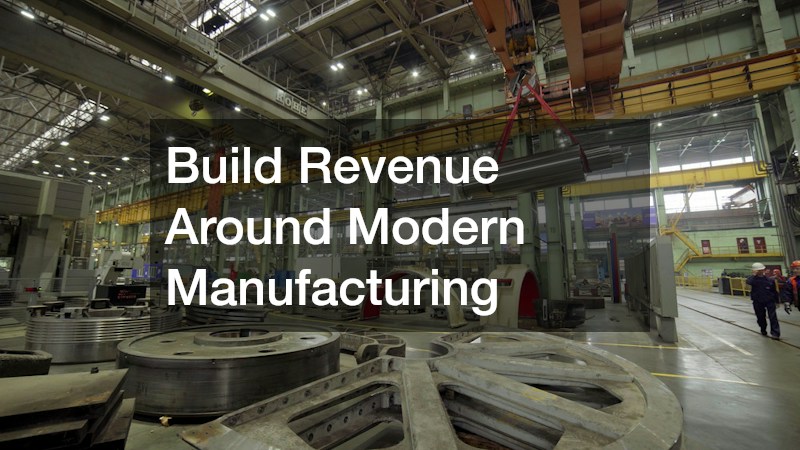
Infrastructure investment frequently stimulates manufacturing activity. New factories, warehouses, utility systems, transportation networks, and energy projects require components that must be fabricated to precise specifications.
This creates opportunities for companies using robotic fabrication to increase production speed, consistency, and repeatability. Automated welding, cutting, assembly, and material handling systems can help manufacturers meet larger production volumes while maintaining tighter tolerances.
At the same time, customized components still require specialized machining. A cnc machine mill and turning shop may support infrastructure-related customers by producing shafts, fittings, brackets, housings, repair components, tooling, and other precision parts.
These businesses can generate revenue from both new construction and maintenance. Older infrastructure often requires replacement components that are no longer readily available from original manufacturers. Machine shops capable of reverse engineering or producing small production runs may be able to serve this demand.
The strongest manufacturing opportunities often come from becoming part of a broader supplier network. Rather than waiting for individual consumers, manufacturers can build relationships with contractors, engineering firms, equipment companies, municipalities, and industrial operators.
Target Maintenance as Well as New Projects
New construction receives much of the attention around infrastructure spending, but existing infrastructure requires constant maintenance. In many cases, recurring maintenance can provide steadier revenue than one-time construction contracts.
Industrial equipment, construction machinery, waste systems, manufacturing lines, and agricultural equipment rely heavily on fluid-powered systems. Businesses providing hydraulic services can support repairs, hose replacement, cylinder rebuilding, diagnostics, preventive maintenance, and emergency work.
Maintenance demand can continue regardless of whether new construction slows. Equipment breaks down, components wear, and facilities need routine servicing to remain operational.
Companies can also build recurring relationships by offering inspection schedules, preventive maintenance plans, emergency response programs, or long-term service agreements. These arrangements make revenue more predictable while helping clients avoid unexpected failures.
The ability to respond quickly can be especially valuable. Infrastructure operators and contractors often lose significant time when critical equipment fails, so service providers capable of rapid diagnosis and repair can become important long-term partners.
Find Opportunity in Water Infrastructure
Water infrastructure represents another broad area where specialized businesses can find work. Residential growth, agricultural activity, industrial development, and rural construction all require reliable access to water.
In areas that rely on private groundwater systems, well pump installation can become necessary for new homes, farms, businesses, and remote facilities. Existing systems also create ongoing demand for pump replacement, electrical repairs, pressure system maintenance, and water delivery troubleshooting.
Water-related work often benefits from population growth and development outside traditional municipal service areas. As communities expand into rural or semi-rural locations, contractors that understand local groundwater systems may see additional opportunities.
Businesses operating in this sector can also build complementary services around inspection, maintenance, testing, and emergency repair. Infrastructure development rarely stops after installation. Pumps, controls, tanks, pipes, and other components all require attention throughout their service lives.
Capitalize on Aging Systems
A significant share of infrastructure opportunity comes from systems that are already decades old. Bridges, pipelines, tanks, water systems, industrial equipment, and structural components deteriorate over time.
This creates demand for corrosion testing and related inspection services. Corrosion can affect metals exposed to water, chemicals, weather, salt, and industrial environments. Detecting deterioration before equipment or structures fail can help organizations prioritize maintenance and replacement.
Testing companies may serve industries including transportation, utilities, manufacturing, oil and gas, construction, marine operations, and municipal infrastructure.
The economic opportunity goes beyond identifying damage. Testing often leads to additional work involving coatings, repair, replacement, engineering assessments, or ongoing monitoring. Businesses that specialize in inspection can therefore become involved early in maintenance and capital planning decisions.
As infrastructure continues to age, owners are likely to place greater emphasis on extending asset life rather than replacing every system immediately. That can create steady demand for testing and condition assessment.
Support Agricultural Infrastructure
Agriculture depends on infrastructure just as much as cities and industrial operations do. Farms require roads, drainage, irrigation, storage, fencing, equipment, water systems, electrical service, and transportation networks.
Demand for farm supplies can increase as agricultural businesses upgrade facilities, expand acreage, replace equipment, or improve efficiency. Suppliers may serve both large operations and smaller producers by providing essential materials used in daily operations.
Infrastructure improvements in rural areas can also benefit agricultural businesses indirectly. Better roads reduce transportation challenges, expanded broadband improves access to digital tools, and upgraded power systems can support more sophisticated farm equipment.
Businesses serving agriculture should look for opportunities connected to both production and facility development. Barns, grain systems, livestock facilities, irrigation networks, maintenance buildings, and processing operations often require multiple suppliers and contractors.
Agricultural infrastructure can also create recurring demand because equipment and materials regularly wear out, need replacement, or require seasonal replenishment.
Serve Food and Agricultural Logistics
Transportation is another critical piece of infrastructure development. Products must move between farms, processors, manufacturers, warehouses, distributors, and retailers.
A food grade product hauling service can benefit from investments in agricultural production, food manufacturing, cold storage, distribution centers, and processing facilities. Specialized transportation is particularly important when cargo must meet sanitation, handling, or contamination-control requirements.
New food processing facilities can generate recurring transportation needs rather than one-time work. Raw ingredients may arrive daily, while finished products must move continuously to distributors or customers.
Transportation providers can look for opportunities near growing agricultural regions, manufacturing corridors, industrial parks, ports, and distribution hubs. Building relationships with processors and manufacturers before facilities reach full production can help establish long-term contracts.
Logistics businesses can also differentiate themselves through scheduling reliability, specialized equipment, regulatory knowledge, and documentation practices.
Pursue Opportunities in Waste and Sanitation
Infrastructure growth creates additional demand for waste management systems. New homes, businesses, farms, campgrounds, industrial properties, and rural developments may rely on decentralized wastewater systems rather than municipal sewer connections.
That creates ongoing demand for septic pumping, inspection, maintenance, and system troubleshooting. Unlike some construction services, wastewater maintenance repeats throughout the life of a property.
Population growth in rural and suburban areas can expand the available customer base. Existing systems also require routine service regardless of new development.
Businesses in this space can improve profitability by building dense service areas, offering scheduled maintenance, and establishing relationships with property managers, homeowners associations, commercial facilities, and real estate professionals.
The recurring nature of sanitation work can make it especially attractive for companies looking for predictable revenue rather than depending entirely on project-based contracts.
Watch for Opportunities Around Equipment Utilization
Infrastructure construction and maintenance require expensive equipment, but many contractors do not want to own every machine they may need. This creates opportunities for companies that rent, repair, transport, or support specialized equipment.
Rental businesses can benefit when contractors need temporary access to lifting equipment, excavation machinery, generators, pumps, compressors, and specialized tools. Service companies can benefit from maintaining that equipment.
Equipment-related businesses should pay attention to large construction schedules. A highway project, industrial expansion, water treatment plant, or warehouse development can generate demand for equipment over months or years.
Companies may also create additional revenue by providing operators, delivery, setup, inspection, or maintenance along with equipment access.
The broader lesson is that infrastructure spending does not only benefit the companies performing the main construction. It also supports businesses that help those contractors stay productive.
Develop Relationships With Larger Contractors
One of the fastest ways for smaller companies to enter infrastructure markets is through subcontracting and supplier relationships.
Large general contractors frequently outsource specialized work because maintaining every capability internally would be inefficient. They may need fabrication, machining, hauling, equipment rental, inspection, repair, materials, or environmental services.
Smaller businesses should identify contractors already active in infrastructure development and determine where their own capabilities fit.
Vendor registration programs can provide another entry point. Municipalities, utilities, engineering firms, industrial companies, and major contractors often maintain approved supplier databases.
Businesses should be prepared to provide insurance documentation, safety records, certifications, references, equipment lists, and pricing information. Infrastructure buyers often evaluate operational reliability just as carefully as cost.
Focus on Recurring Revenue Opportunities
The most profitable infrastructure opportunities are not always the largest individual contracts. Recurring services can generate more predictable long-term revenue.
Maintenance, inspection, transportation, pumping, equipment repair, testing, and supply replenishment all have recurring characteristics. Once a business establishes a relationship with a facility or contractor, additional work may continue for years.
Recurring customers also reduce the cost of constantly finding new business. Sales teams can focus more time on expanding accounts instead of replacing lost projects.
Companies can encourage repeat business through service agreements, scheduled inspections, recurring deliveries, maintenance reminders, or priority response programs.
Infrastructure assets have long service lives. Businesses that remain involved after construction can capture far more revenue than companies that participate only during the initial build.
Use Geographic Growth to Guide Expansion

Infrastructure investment is not distributed evenly. Some regions experience rapid population growth, while others attract manufacturing, logistics, agriculture, or energy projects.
Companies should evaluate where their services are most likely to experience increasing demand.
A machining company may benefit from locating near industrial manufacturing clusters. Transportation providers may target logistics corridors. Water and septic companies may find stronger opportunities in growing rural communities. Equipment businesses may benefit from regions with heavy construction activity.
Geographic expansion should be based on measurable demand rather than assumptions. Building permit activity, industrial announcements, population trends, public project schedules, and utility expansion plans can all help businesses identify promising markets.
Turn Specialized Expertise Into a Competitive Advantage

Infrastructure projects often involve technical requirements, safety standards, regulatory obligations, and strict schedules. Companies capable of handling specialized work can use that expertise to compete without relying entirely on price.
Certifications, trained employees, specialized equipment, compliance systems, and documented experience can all improve credibility.
Businesses should clearly communicate the types of projects they can support, the geographic areas they serve, and the technical problems they solve. Buyers looking for specialized infrastructure partners often value reliability and expertise because delays can affect entire project schedules.
Strong documentation can also help. Case studies, equipment specifications, certifications, safety statistics, and project histories give buyers evidence that a company can handle demanding work.
Build for Long-Term Infrastructure Demand
Infrastructure development should be viewed as an ecosystem rather than a single construction market. Every new road, plant, farm facility, warehouse, water system, and commercial project creates layers of demand for materials, equipment, transportation, repair, inspection, and maintenance.
Businesses that study where investment is flowing can identify niches that align with capabilities they already have. Others may choose to invest in new equipment, certifications, locations, or technical expertise to reach growing markets.
The most durable opportunities often exist where infrastructure creates continuing operational needs. Facilities require maintenance. Equipment requires repair. Products require transportation. Water and sanitation systems require service. Structural and mechanical assets require inspection.
Companies that position themselves around those ongoing needs can participate in infrastructure development long after the original construction crews leave the site. By focusing on specialized services, recurring demand, supplier relationships, and geographic growth, businesses can turn infrastructure investment into sustainable revenue opportunities.