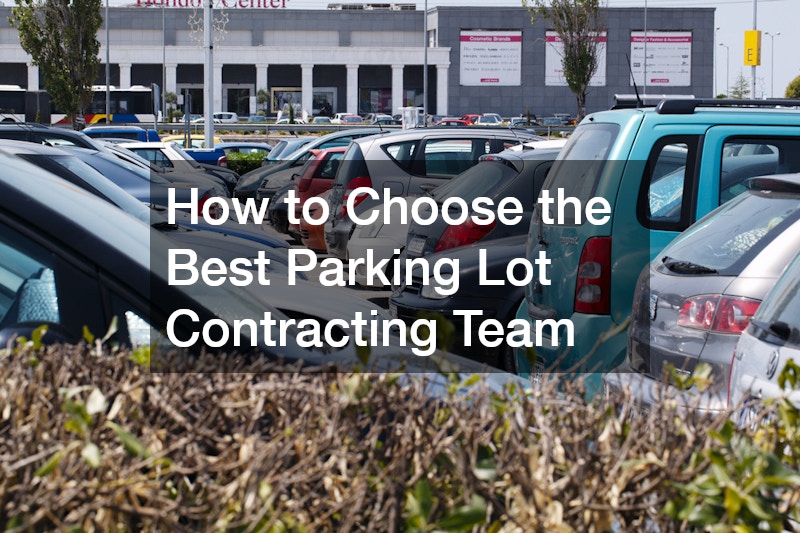
The physical grounds of your commercial property communicate volumes before a visitor even steps foot inside your building. A parking lot is rarely recognized for its pristine condition, but it is instantly criticized when it fails. From the jarring impact of a deep pothole to the frustrating inconvenience of poor water drainage, a deteriorating surface is a massive liability. It damages vehicles, creates slip-and-fall hazards, and ultimately depreciates the overarching value of your real estate asset.
However, rectifying a failing surface is one of the most significant capital expenditures a property manager or owner will face. The stakes are incredibly high. Selecting the right team to handle the job is not merely a matter of finding the lowest bidder; it is an exercise in risk management, technical evaluation, and strategic partnership. A poorly executed job might look acceptable on the day it is finished, but within a year, subgrade failures, reflective cracking, and unraveling edges will reveal the true cost of subpar workmanship.
To protect your investment, you must approach the selection process with the rigor of an auditor. You need a contracting team that understands structural engineering, local climate variables, and strict municipal regulations. This ultimate guide will walk you through a highly detailed, step-by-step masterclass on vetting, evaluating, and ultimately hiring the ideal crew for your specific project, ensuring your new surface lasts for decades rather than just a few seasons.
Step 1: Clearly Define Your Project Scope and Traffic Demands
Before you even begin reaching out to potential candidates, you must have an uncompromising understanding of your own project. You cannot evaluate a contractor’s capability if you do not know exactly what you are asking them to do. A surface failure is usually a symptom of a deeper issue, and understanding your traffic demands is the first step in diagnosing the necessary cure.
Audit Your Current Layout and Future Use
The engineering requirements for a surface are dictated primarily by the weight and frequency of the vehicles traversing it. In the industry, this is measured in Equivalent Single Axle Loads (ESALs).
-
Light Traffic Zones: Areas reserved strictly for standard passenger vehicles require less structural thickness. If you are managing a small office complex, your base and surface courses will be relatively standard.
-
Heavy Duty Zones: If your property features loading docks, dumpster pads, or regular deliveries from multi-axle freight trucks, the structural demands skyrocket. The turning radius of a heavy truck exerts immense shear stress on the surface. These specific areas require specialized mix designs and significantly thicker aggregate subbases to prevent structural rutting.
-
Water Management: Evaluate how water flows across your property during a heavy storm. Are there standing puddles (bird baths)? Does water flow toward the building instead of the catch basins? Proper grading and hydrological planning must be scoped out before any material is laid.
Differentiate Scaling Needs
The scale of your project dictates the type of team you need to hire. It is crucial to understand that the machinery, logistics, and engineering knowledge required for a small residential job are vastly different from those needed for a sprawling commercial facility. A crew that specializes primarily in basic driveway paving might excel at residential layouts but will quickly find themselves overwhelmed by the sheer tonnage, traffic control requirements, and complex water runoff systems required by massive retail centers. For large-scale projects, you need an organization to provide a paving service that can handle the rigorous demands of multi-phase execution, ADA compliance, and heavy-duty structural engineering.
Identify Core Fixes vs. Total Overhauls
Determine the depth of the intervention required. Contracting teams will generally propose one of three solutions, and you should know which applies to your property:
-
Preventative Maintenance (Sealcoating and Crack Sealing): Ideal for surfaces that are structurally sound but visually faded and beginning to show minor, non-structural surface cracks.
-
Mill and Overlay: If the subbase is intact but the top layer is oxidized and heavily cracked, the crew will grind off the top two inches of material and replace it with a fresh wear course.
-
Full-Depth Reclamation/Reconstruction: If the surface resembles a dry riverbed with deep “alligator cracking” and massive potholes, the foundation has failed. The entire area must be excavated down to the dirt, re-graded, and rebuilt from the bottom up.
Step 2: Source Qualified Candidates Within Your Geographical Area

Once you have a firm grasp on your project scope, the next phase is building a list of viable candidates. The key here is not just finding any crew, but finding an established crew deeply rooted in your specific geographic region. The logistics of construction materials and the realities of the local climate make regional proximity a non-negotiable factor.
Prioritize Regional Proximity for Better Logistics
Materials used in this type of construction are highly temperature-sensitive. The hot mix must be transported from the manufacturing plant to your property and laid while it is still within a very specific temperature window (typically between 275°F and 300°F). If a contractor is driving materials from hours away, the mix will begin to cool in the trucks. Cool mix is impossible to compact properly, leading to low density, high air voids, and premature failure.
Furthermore, local climate deeply impacts construction. A regional team understands your area’s specific freeze-thaw cycles, soil composition, and humidity levels. Working with a dedicated local paving company ensures that the crew knows exactly how to design a subbase that can withstand your specific seasonal shifts. They will also be intimately familiar with the municipal permitting processes, zoning laws, and environmental regulations unique to your county or city.
Leverage B2B Networks and Industry Associations
Do not rely solely on basic web searches to build your candidate list. Instead, tap into professional networks to find highly vetted organizations.
-
National Associations: Look for organizations affiliated with the National Asphalt Pavement Association (NAPA) or the Associated General Contractors of America (AGC). Membership in these organizations usually indicates a commitment to continuing education and industry best practices.
-
Property Management Networks: Speak with other commercial property managers or commercial real estate brokers in your area. Ask them who they trust for their capital expenditure projects.
-
Builders’ Exchanges: Local builders’ exchanges often maintain directories of reputable subcontractors who have proven themselves on large-scale commercial developments.
Avoid the “Storm Chasers”
You must be vigilant in filtering out opportunistic transient crews, often referred to in the industry as “gypsies” or “storm chasers.” These groups travel from town to town, knocking on doors and offering incredibly low prices, claiming they have “leftover material from a job down the street.” They usually demand cash upfront, use substandard materials, and vanish immediately after the job is done, leaving you with no warranty and a failing surface. To avoid this, cross-reference your list of paving companies against the Better Business Bureau (BBB) and verify their physical, permanent office address. If they only have a P.O. Box and out-of-state license plates, cross them off your list entirely.
Step 3: Verify Liability Insurance, Licensing, and Safety Records
With a shortlist of regional candidates in hand, the next step is the most critical for protecting yourself from catastrophic financial liability: strict verification of credentials, insurance, and safety track records. A construction site is inherently dangerous, involving massive machinery, boiling hot materials, and active traffic. If an accident occurs on your property and the crew is not properly covered, you could be held liable.
Demand Proof of Comprehensive Coverage
Do not simply take a contractor’s word that they are insured. Require a Certificate of Insurance (COI) sent directly from their insurance broker to you, listing your business as an additional insured. You should look for three specific pillars of coverage:
-
General Liability Insurance: This covers property damage and third-party injuries. For a commercial project, you should expect a minimum of $1 million to $2 million per occurrence, though $5 million umbrella policies are standard for larger properties.
-
Worker’s Compensation: This is absolutely mandatory. If a laborer is severely burned or injured by heavy machinery on your property and their employer lacks worker’s comp, the injured party can sue you directly for medical bills and lost wages.
-
Commercial Auto Coverage: Given the fleet of dump trucks and transport vehicles moving in and out of your lot, robust commercial auto insurance is required to cover any collisions on or near the site.
Validate Specialized Trade Licenses
Every municipality has different rules, but you must ensure the entity is legally authorized to perform commercial construction in your jurisdiction. Use your state’s contractor registry database to look up their license numbers. Check to ensure the license is currently active, bonded, and carries no unresolved consumer complaints or disciplinary actions from the licensing board. Choosing licensed paving contractors acts as a legal safeguard; it ensures the state holds the company to specific regulatory and ethical standards. Similarly, well-credentialed asphalt contractors are far more likely to strictly adhere to OSHA regulations, ensuring that the heavy machinery operators and laborers are certified and working under safe, legally compliant conditions.
Analyze the Experience Modification Rate (EMR)
One of the best-kept secrets in evaluating construction teams is asking for their Experience Modification Rate (EMR). The EMR is a metric used by insurance companies to calculate worker’s compensation premiums based on a company’s historical safety record.
-
An EMR of 1.0 is the industry average.
-
An EMR above 1.0 indicates that the company has had more accidents and injuries than average. You should view this as a massive red flag.
-
An EMR below 1.0 (e.g., 0.85) proves that the company has an outstanding safety record, resulting in fewer accidents, fewer delays, and lower risk for your property. Always ask for this number during the vetting process.
Step 4: Evaluate Technical Expertise, Machinery, and Mix Specializations

Insurance and licenses protect you legally, but technical expertise and superior machinery are what actually build a durable product. Construction is a highly mechanized industry, and the quality of the final surface is directly correlated to the quality of the equipment used to lay it and the chemistry of the materials.
Inspect the Contractor’s Fleet Capability
A high-quality finish requires a fleet of specialized, well-maintained equipment. During your vetting process, ask about the machinery they intend to use on your project.
-
Milling Machines: If you are doing an overlay, they need high-powered milling machines to accurately remove the top layer of old material without damaging the subbase.
-
Self-Propelled Pavers: The machine that lays the material must have heated screeds and automated grade controls to ensure perfect leveling and drainage slopes.
-
Vibratory Rollers: Compaction is arguably the most critical step of the process. They must use heavy, vibratory steel-drum rollers for the initial breakdown passes, and pneumatic (rubber-tire) rollers to knead the surface and seal it tightly against water intrusion.
If a team is relying entirely on rented, outdated, or undersized equipment, they are likely to encounter mechanical breakdowns that will stall your project and ruin the temperature consistency of the materials.
Understand Material Sourcing and Mix Designs
The actual material used on your project is not a one-size-fits-all commodity. It is an engineered blend of aggregates (crushed rock, gravel, sand) and a petroleum-based liquid binder. Ask your candidates about their mix designs. What Performance Grade (PG) binder are they using? Does it account for the extreme heat of summer and the freezing temperatures of winter? An elite asphalt company will have a deep understanding of mix volumetrics and will often have close, prioritized partnerships with local aggregate manufacturing plants, ensuring they get the first pull of the highest quality mix every morning.
Furthermore, a parking facility is rarely composed of just one material. You must account for curbs, gutters, dumpster pads, and sidewalks. Heavy trash trucks will instantly destroy standard flexible pavements, requiring high-strength, rigid materials for those specific load zones. A team that also commands robust concrete services will know exactly how to design high-PSI (pounds per square inch) mixtures, reinforced with steel rebar or wire mesh, to handle immense static loads and manage aggressive water flow in drainage channels without cracking under pressure.
Confirm Subbase Preparation Standards
A beautiful top surface is utterly useless if the foundation beneath it is weak. Before any surface material is laid, the subbase must be rigorously prepared. Ask the candidates how they plan to test the subgrade. They should discuss “proof rolling”—a process where a fully loaded dump truck is driven slowly over the bare dirt or aggregate base. If the ground deflects, pumps, or ruts under the weight, the subgrade is too soft and must be excavated, stabilized with stone or cementitious materials, and re-compacted. If a contractor brushes off questions about subbase preparation, immediately disqualify them.
Step 5: Audit Past Portfolios and Conduct Direct Reference Checks
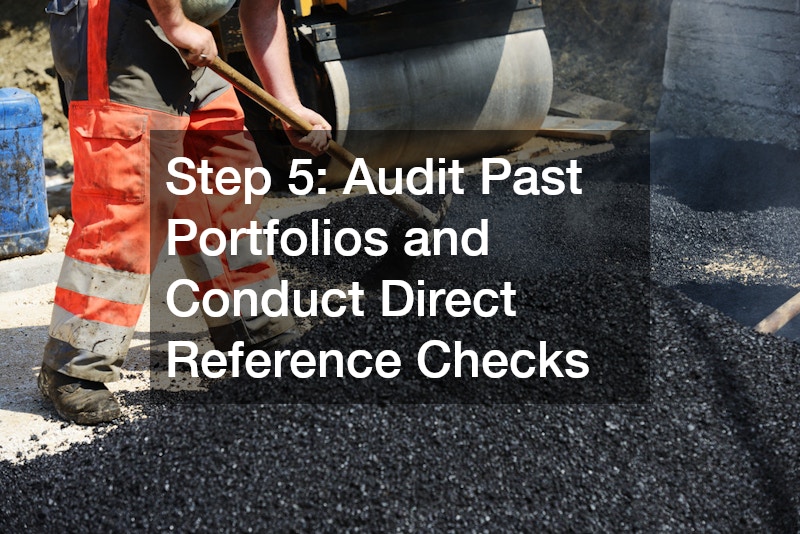
You have verified their location, their insurance, and their technical knowledge. The final step before awarding a contract is verifying their history. Contractors are essentially salespeople during the bidding phase; the only way to cut through the sales pitch is to look at their past work and speak with the people who previously hired them.
Go See Finished Projects in Person
A digital portfolio of freshly finished, jet-black parking lots is easy to produce. Every project looks phenomenal on day one. To truly evaluate a team’s workmanship, you need to visit projects they completed three to five years ago.
Take a drive to these older sites and look for the following telltale signs of failure:
-
Raveling: Is the aggregate (the rocks) popping out of the surface, making it look rough and pitted? This indicates poor compaction or a mix that was too cool when laid.
-
Bird Baths: Are there large water stains or active puddles in the middle of the lot? This proves the crew failed to establish a proper grading slope for water runoff.
-
Joint Failures: Look at the seams where two lanes of material were joined together. If there are long cracks running exactly down the seam, they failed to properly fuse the longitudinal joints.
Ask Strategic Questions During Reference Calls
When you call past clients, do not ask simple “yes or no” questions. You want to uncover how the team performs under pressure and how they handle the inevitable surprises of construction. Use this script as a baseline:
-
Did the crew maintain a clean and safe worksite, and was traffic disruption minimized for your tenants?
-
Did they uncover any unexpected subgrade issues, and if so, did they handle the change orders fairly or use them as a chance to price-gouge?
-
How has the surface held up after multiple winters/summers?
-
If you had a warranty issue, were they responsive in coming back to fix it?
Speaking directly to past property managers about their overall experiences with commercial paving services will reveal if the crew communicates well and hits deadlines. Additionally, asking specific questions about the longevity of the curbs and loading zones from clients who utilized their concrete contractors will confirm if their rigid structural elements are truly built to withstand heavy commercial use without crumbling after the first freeze-thaw cycle.
Review Detailed Project Line Items and Bid Comparisons
Once you have collected bids from the final contenders, you must evaluate them side-by-side. Never immediately select the lowest bidder without dissecting the line items. Unscrupulous contractors will artificially lower their bids by cutting corners on the materials.
-
Thickness: Ensure the bid specifies the compacted thickness of the materials, not the uncompacted thickness. Two inches of loose material will compact down to an inch and a half, shortchanging your structural integrity.
-
Tonnage vs. Square Footage: Ensure the bid specifies exactly how many tons of material will be used, rather than just the square footage of the lot. This prevents the contractor from spreading the material too thin to save money on supplies.
-
Mobilization and Clean Up: Ensure the bid explicitly states who is responsible for hauling away the old, milled debris and sweeping the site clean upon completion.
A bid that is 20% cheaper than the competition is almost always omitting essential structural thickness, skipping subgrade repairs, or using inferior, recycled materials. You are not buying a commodity; you are buying structural engineering.
Conclusion
Selecting the right team to reconstruct or maintain your commercial parking facility is a rigorous process, but it is one that pays massive dividends in the long run. By clearly defining your structural needs, demanding stringent local credentials, verifying safety records, and auditing their historical performance, you strip away the risk of hiring a subpar crew.
A parking lot is a massive financial asset and a critical component of your property’s overall safety and aesthetic appeal. Cutting corners during the vetting phase inevitably leads to premature surface failure, aggressive water damage, and the terrifying prospect of having to fund a total reconstruction years before it should be necessary.
Arm yourself with the checklists and strategic questions detailed in this guide. When you sit down at the table with prospective teams, they will instantly recognize that they are dealing with an educated, uncompromising property owner. Take your time, demand transparency, and invest in a contracting partnership that will build a foundation designed to stand the test of time, traffic, and the elements.